

Through the Smoke
To Understand is to Under-Stand: Standing-Under the Authority of Someone Else’s Experience.
The Speeding Cop
I was going 85 in the far-left lane—fifteen over the limit. It was late, the road mostly empty, and then suddenly, WHOOOSH—a pair of headlights ripped past me on the right. My chest rattled with the sound of RPMs, and before I could think, my horn was blasting.
Then I saw the label: Highway Patrol.
My first reaction was frustration. Why weren’t his sirens on? Was he off duty? In civilian-mode or cop-mode? He startled me. But then I wondered: what context am I missing? Maybe there was an emergency. Maybe someone was in danger. Maybe his urgency justified the risk.
Would I extend the same grace to someone without a badge? Are there circumstances that justify breaking the law? I think so. And the truth is, we rarely know the full story. Every driver on the road is making risk calculations we can’t see. "If I don't get there in time, I might lose my job." Sure, maybe they should leave earlier or manage their time better, but that misses the point:
We are so quick to judge what we do not understand.
Understanding by Standing-Under
To understand means to under-stand — to stand under the authority of someone else’s context or experience. That posture is what I know as empathy.
Think about a red light at an empty intersection. If you're driving your pregnant wife to the hospital and contractions are two minutes apart, do you sit there and wait for green? Or do you run it safely and deal with the consequences later?
A police officer might pull you over. They won’t know what’s happening until they reach your window. But would a judge agree you broke the law?
Traffic laws exists to create order and safety. But empathy asks: What is safest in this specific moment? Would it not be safest to get your wife to a doctor as soon as possible? There's the letter of the law, and there's the spirit of the law. Empathy lives in that space in between.
It means asking: What rules were they playing by? What risks were they weighing? What story don’t I know yet?
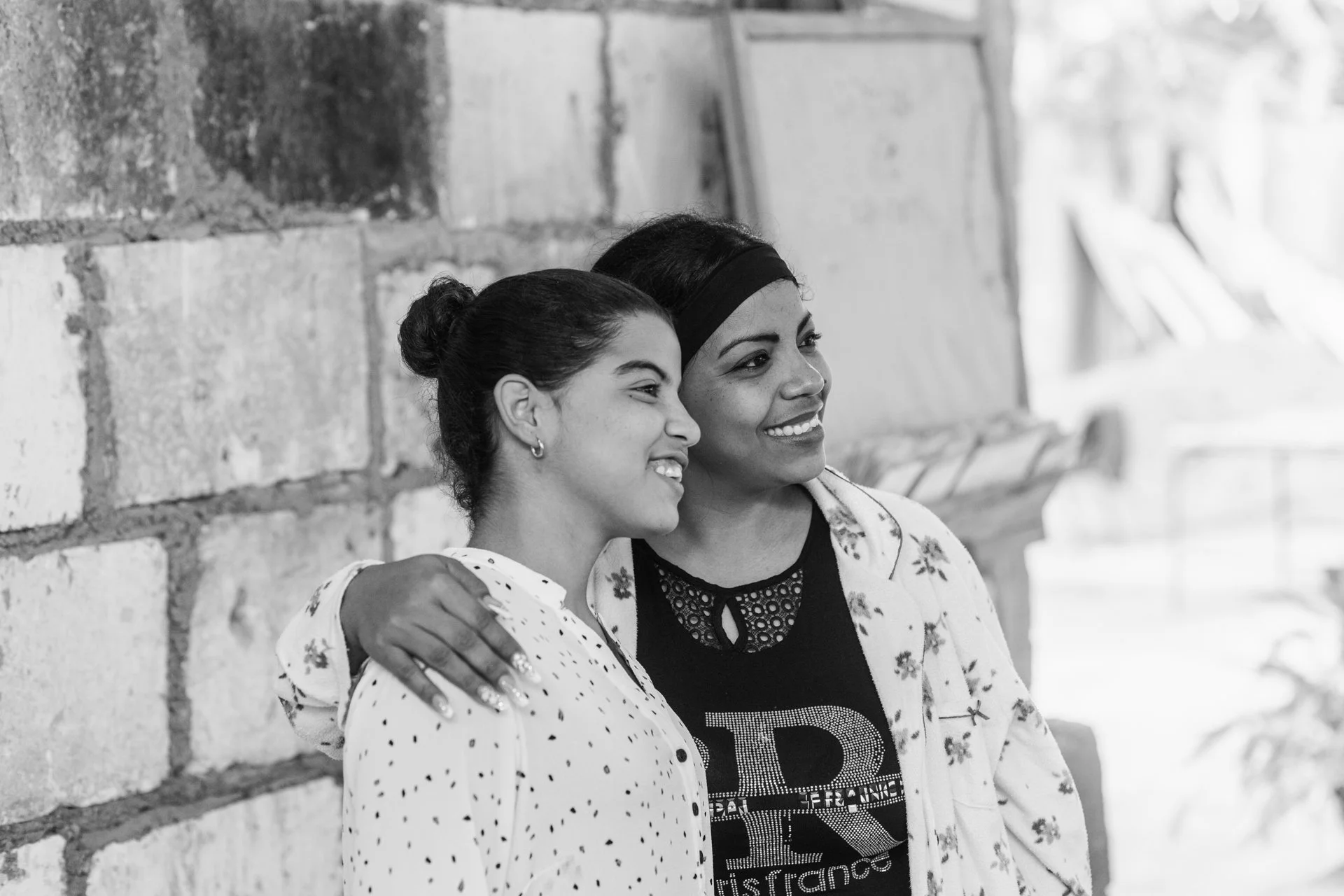
@danniobracken photo: Two women pose for the camera in Cuba. What’s their story?
Empathy is True Power
Empathy isn’t passivity or weak vulnerability. It’s a higher vantage point.
To lack empathy is to lack humility. And to lack humility is to fall into arrogance—the belief that our way is the onlyway to see the world. Arrogance keeps us blind and isolated. Empathy opens us up to the fullness of God’s creation.
That’s why Jesus came as a baby. The Creator of the universe chose to live a full human experience first. Before he taught, he listened. Before he healed, he walked. Before he spoke truth, he shared tables.
He stood under.
Philippians 2 says Jesus did not consider equality with God something to be used for his advantage. Instead, he emptied himself. He made himself nothing. He chose servitude and self-sacrifice. And in doing so, he showed us a new kind of power—one not built on dominance, but on understanding.
How did he end up on a Roman cross? Not through threat of violence. But through radical humility. Through a life lived trying to unite people who preferred their power.
Because here's the hard truth:
Unity and equality are oppressive to those who have hoarded power.
In the pursuit of peace, those on top have to share. The one word we try to teach every toddler: share.
But we resist it. Remember that scene in Finding Nemo? The birds fighting over food, all yelling "Mine! Mine! Mine!"
That’s us. That’s humanity.
Empathy Is Vision
In all my years working in communication and church media, I’ve become convinced of this:
Our greatest need for repentance comes from our insatiable appetite for comfort.
Comfort comes at a cost. It insulates us. It tells us we're safe while others suffer. But empathy is discomfort. It requires proximity to pain. It requires standing under someone else's burden.
Only then can "mine" become "ours." Only then do we stop reinforcing borders, trade wars, and militaries. Only then do we see clearly.
Power from the top is just smoke and mirrors. It manipulates. It consolidates. It avoids conflict. It protects predictability. It operates from fear—fear of what's different, what's unknown.
But exposure changes everything.
The first time you face your fear, it starts to lose its grip. That’s the essence of empathy: stepping into what you do not understand, and finding out it’s not so scary after all.
I want to live that way. I want to see through the smoke. I want to shed my anxiety and anger in favor of grace and curiosity. I want to trust that the way of Jesus—the baby, the table-sharer, the foot-washer, the cross-bearer—is the truest thing in the haze of this world.
Because in all the fog and noise and speed of life, empathy might just be the clearest vision we have.

@danniobracken photo: The candid photographer for whom the women above were posing. Through what lens do you see the world?
This journey of ours might not be clean and tidy. I'm an emotional writer. Sometimes my reflections may feel ambiguous. Other times there may be practical steps we can take to be better humans. What encourages me most, is that you've chosen to be curious. In this blog, I'll share personal photos & stories, lessons in church leadership, raw human reflections and challenges that keep us tilted towards gratitude and (agape) love.
Practice
1. Reflect
Who have you judged without knowing the full story?
This week, try to stand-under someone else’s experience. A maga-hat? A lib-tard? Come on now...ask a question instead of making a judgment. Let your curiosity lead, not your conclusions.
2. Relate
Practice one act of intentional empathy.
Have a conversation with someone who sees the world differently. Ask them what shaped their perspective. Don’t debate—just listen to understand.
3. React
What’s one moment when empathy changed you?
I’d love to hear your story. Drop a comment or send me a message. Let’s learn from each other’s perspective.